


What is the minimum wind speed that a Met Mast can detect?
Dec 17, 2025
Leave a message
As a supplier of Met Mast Wind Measurement systems, I often get asked about the minimum wind speed that a Met Mast can detect. It's a great question, and one that's crucial for anyone involved in wind energy projects, environmental monitoring, or just curious about how these things work.
Let's start by understanding what a Met Mast is. A Met Mast, short for Meteorological Mast, is a tall structure equipped with various sensors to measure different meteorological parameters, with wind speed and direction being among the most important. These masts are essential for gathering accurate data about wind resources at a specific location, which is vital for the planning and operation of wind farms.
So, what's the minimum wind speed a Met Mast can detect? Well, it depends on a few factors, including the type of sensors used. Most modern Met Masts are equipped with anemometers, which are devices specifically designed to measure wind speed. There are different types of anemometers, and each has its own threshold for detecting wind.
Cup anemometers are one of the most common types used on Met Masts. These anemometers consist of three or four cups mounted on horizontal arms that rotate around a vertical axis. The rotation speed of the cups is proportional to the wind speed. Cup anemometers are generally quite reliable and can detect wind speeds as low as 0.5 to 1.0 meters per second (m/s). That's equivalent to about 1.1 to 2.2 miles per hour (mph).
Another type of anemometer is the ultrasonic anemometer. Instead of using moving parts like cups, ultrasonic anemometers measure wind speed by sending ultrasonic pulses between pairs of transducers. The time it takes for the pulses to travel between the transducers is affected by the wind, allowing the anemometer to calculate the wind speed. Ultrasonic anemometers are known for their high accuracy and fast response times. They can typically detect wind speeds as low as 0.1 to 0.2 m/s (0.2 to 0.4 mph).
However, it's important to note that the minimum detectable wind speed is not the only factor to consider. The accuracy of the measurement also matters. At very low wind speeds, the measurement error can be relatively high, especially for cup anemometers. Ultrasonic anemometers tend to have better accuracy at low wind speeds, but they can be more expensive and require more maintenance.
In addition to the type of anemometer, other factors can also affect the minimum detectable wind speed. For example, the height of the sensors on the Met Mast can make a difference. Wind speeds generally increase with height above the ground, so sensors placed higher up on the mast may be able to detect lower wind speeds more accurately. The surrounding terrain and obstacles can also have an impact. If the Met Mast is located in a sheltered area or near large buildings or trees, the wind flow can be disrupted, making it more difficult to detect low wind speeds.
As a Met Mast Wind Measurement supplier, we understand the importance of providing accurate and reliable data. That's why we offer a range of high-quality sensors and Met Masts that are designed to meet the specific needs of our customers. Whether you're looking for a system to measure wind resources for a wind farm project or for environmental monitoring purposes, we can help you find the right solution.
If you're interested in learning more about our Met Mast Wind Measurement systems, or if you have any questions about the minimum wind speed that a Met Mast can detect, please don't hesitate to [contact us for a procurement discussion]. We're here to help you make informed decisions and ensure that you get the most accurate and reliable wind data possible.
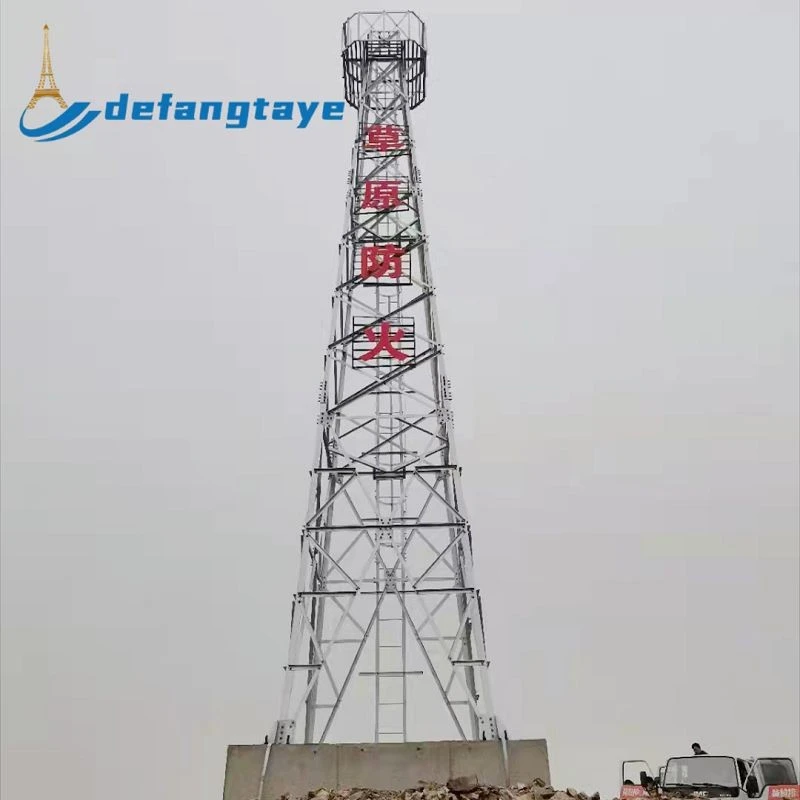

Now, let's take a look at some related products that might be of interest to you. If you're in the market for a Meteorological Observation Tower, we have a variety of options available. These towers are designed to provide a stable platform for mounting meteorological sensors and can be customized to meet your specific requirements.
We also offer Steel Watch Towers and Safety Towers. These towers are not only useful for wind measurement but can also be used for security, surveillance, and other applications. They are made of high-quality steel and are built to withstand harsh weather conditions.
In conclusion, the minimum wind speed that a Met Mast can detect depends on the type of sensors used, as well as other factors such as the height of the sensors and the surrounding environment. Cup anemometers can typically detect wind speeds as low as 0.5 to 1.0 m/s, while ultrasonic anemometers can detect speeds as low as 0.1 to 0.2 m/s. At [our company], we offer a range of Met Mast Wind Measurement systems and related products to help you get the most accurate and reliable wind data possible. If you're interested in learning more or have any questions, please [contact us for a procurement discussion].
References
- "Wind Energy Explained: Theory, Design, and Application" by J.F. Manwell, J.G. McGowan, and A.L. Rogers
- "Meteorological Measurement Systems" by R. Stull
Send Inquiry