


How are steel transmission towers monitored for structural health?
Jan 15, 2026
Leave a message
How are steel transmission towers monitored for structural health?
As a supplier of steel transmission towers, I understand the critical importance of ensuring the structural health of these vital components in the power transmission infrastructure. Steel transmission towers are designed to withstand various environmental loads and operational stresses over their service life. However, factors such as weather conditions, material degradation, and unforeseen events can pose threats to their integrity. In this blog, I will explore the different methods and technologies used to monitor the structural health of steel transmission towers.
Visual Inspection
Visual inspection is the most basic and traditional method of monitoring steel transmission towers. It involves a thorough examination of the tower's components, including the foundation, legs, cross - arms, and bolts. Trained inspectors visually check for signs of corrosion, deformation, cracks, and loose connections.
Corrosion is a major concern for steel transmission towers, especially in areas with high humidity, salt spray, or industrial pollution. Inspectors look for rust spots, flaking paint, and pitting on the steel surface. Deformation can occur due to excessive loads or foundation settlement. Signs of deformation include bent members, misaligned cross - arms, or a leaning tower. Cracks can develop in critical areas such as welds or bolt holes, and they need to be detected early to prevent further propagation. Loose connections, such as bolts or nuts that have come loose, can also compromise the tower's stability.

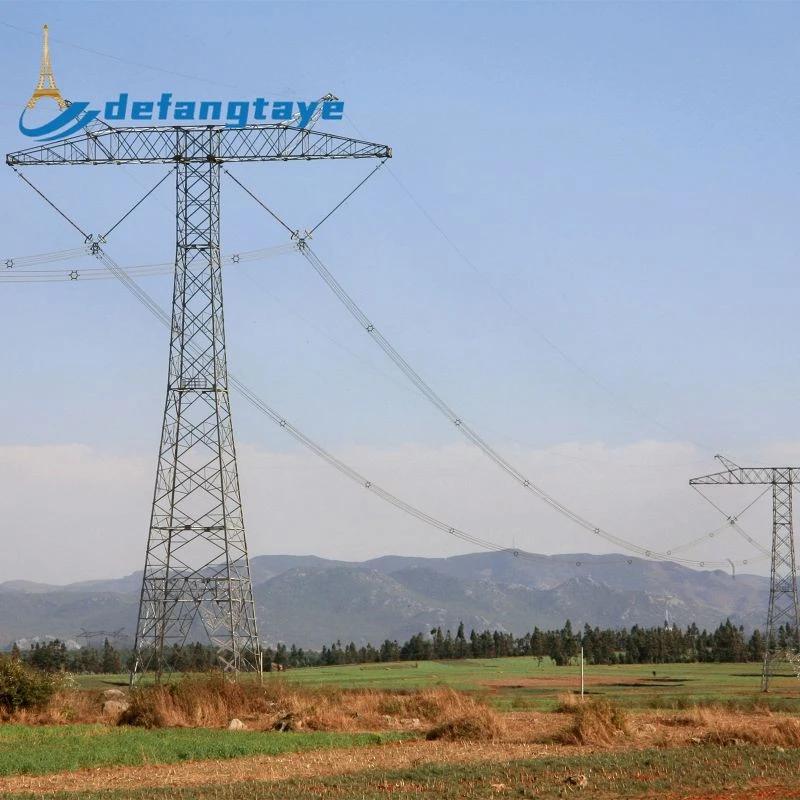
Visual inspection is typically carried out at regular intervals, depending on the tower's location and operating conditions. It is a cost - effective method, but it has limitations. Some defects may be hidden from view, and the inspection results can be subjective, depending on the inspector's experience and training.
Non - Destructive Testing (NDT)
Non - destructive testing techniques are used to detect internal defects in the steel components of transmission towers without causing damage. These techniques are more accurate and reliable than visual inspection for identifying hidden flaws.
One commonly used NDT method is ultrasonic testing. Ultrasonic waves are sent through the steel, and any internal defects such as cracks or voids will reflect the waves back. By analyzing the reflected waves, the location and size of the defect can be determined. Ultrasonic testing is particularly useful for detecting flaws in thick steel members, such as tower legs.
Another NDT method is magnetic particle testing. This method is used to detect surface and near - surface defects in ferromagnetic materials, such as steel. A magnetic field is applied to the steel, and magnetic particles are then sprinkled on the surface. If there is a defect, the magnetic field will be distorted, and the magnetic particles will accumulate at the defect site, making it visible.
Radiographic testing, such as X - ray or gamma - ray testing, can also be used to detect internal defects in steel components. However, this method is more expensive and requires special safety precautions due to the use of radiation.
Structural Monitoring Systems
In recent years, the use of structural monitoring systems has become increasingly popular for monitoring the health of steel transmission towers. These systems use sensors to measure various parameters related to the tower's structural behavior, such as strain, displacement, and vibration.
Strain sensors are used to measure the stress and strain levels in the tower's components. By monitoring the strain, it is possible to detect any abnormal loading conditions or structural damage. For example, if a tower is subjected to excessive wind loads, the strain sensors will detect an increase in the stress levels in the affected members.
Displacement sensors are used to measure the movement of the tower. This can include vertical settlement, horizontal displacement, or rotation. Monitoring the displacement can help detect foundation problems or structural instability. For instance, if a tower starts to lean, the displacement sensors will detect the change in its position.
Vibration sensors are used to measure the dynamic response of the tower. The natural frequency and damping ratio of the tower can provide valuable information about its structural integrity. Any changes in these parameters may indicate damage or degradation in the structure. For example, if a tower has suffered damage due to a lightning strike, the vibration characteristics may change.
Structural monitoring systems can be either wired or wireless. Wired systems require the installation of cables to connect the sensors to a data acquisition unit, while wireless systems use radio frequency communication to transmit the sensor data. Wireless systems are more flexible and easier to install, especially in remote locations.
Remote Sensing and Aerial Inspection
Remote sensing technologies, such as satellite imagery and LiDAR (Light Detection and Ranging), can also be used to monitor the structural health of steel transmission towers. Satellite imagery can provide a large - scale view of the tower's location and its surrounding environment. It can be used to detect changes in the terrain, such as landslides or flooding, which may affect the tower's foundation.
LiDAR is a remote sensing technology that uses laser light to create a detailed 3D model of the tower and its surrounding area. By comparing LiDAR data over time, it is possible to detect any changes in the tower's shape or position. LiDAR can also be used to detect vegetation growth near the tower, which can pose a risk to the power lines.
Aerial inspection using drones is another effective method for monitoring steel transmission towers. Drones equipped with high - resolution cameras can provide close - up images of the tower's components, allowing for detailed visual inspection. Drones can also access hard - to - reach areas of the tower, such as the top of the cross - arms.
Importance of Structural Health Monitoring
The structural health monitoring of steel transmission towers is crucial for several reasons. First, it helps ensure the safety and reliability of the power transmission system. A failure of a transmission tower can lead to power outages, which can have a significant impact on the economy and everyday life. By detecting and addressing structural problems early, the risk of tower failure can be minimized.
Second, structural health monitoring can help extend the service life of the towers. By identifying and addressing issues such as corrosion or fatigue early, the need for costly and time - consuming tower replacements can be delayed. This can result in significant cost savings for power utilities and other tower owners.
Third, monitoring the structural health of steel transmission towers can provide valuable data for the design and construction of future towers. By analyzing the data collected from the monitoring systems, engineers can gain a better understanding of the tower's behavior under different loading conditions, and use this information to improve the design and construction methods.
Contact for Purchase and Consultation
At our company, we are committed to providing high - quality steel transmission towers and comprehensive solutions for tower structural health monitoring. Our products include Double Circuit Tower, High Voltage Power Tower, and Transmission Lattice Tower. We have a team of experienced engineers and technicians who can help you select the right monitoring methods and technologies for your specific needs.
If you are interested in purchasing our steel transmission towers or learning more about our structural health monitoring solutions, please contact us. We would be more than happy to have a detailed discussion with you about your requirements and provide you with the best possible service.
References
- ASTM International. (20XX). Standard practices for visual inspection of steel structures.
- American Society of Civil Engineers. (20XX). Guidelines for structural health monitoring of transmission towers.
- International Institute of Electrical and Electronics Engineers. (20XX). Papers on remote sensing and monitoring technologies for power infrastructure.
Send Inquiry